Showing posts with label York. Show all posts

Sunday, April 26, 2015

The Tree of Life at Holy Cross Priory

One of the main features of the Requiem Mass at Holy Cross was a large sculpture installed in the church for the occasion. It was installed by Neill Strain, a renowned floral designer from London.


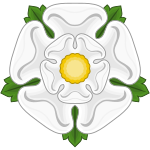
The white rose was seen everywhere in Leicester during this week.

It is a heraldic symbol goes back to Edmund of Langley, the first Duke of York, in the 14th Century. The Yorkist rose is white, reflecting the Christian liturgical symbolism of light, innocence, purity, joy, and glory. Richard III was the last Yorkist king of England.

Planta Genista
Richard's family name was Plantagenet, which in Medieval Latin is Planta Genista, the common broom plant. The family dated from 1126 with Geoffrey V of Anjou, another of my ancestors, and was held by the English ruling family from 1154 to 1485, ending with Richard III. The Plantagenets were the most successful ruling house in England, passing the crown through 14 kings.

The Tree of Life sculpture was quite impressive. It was composed of 2,000 Avalanche roses on branches, fastened into little glass vials full of water. There were little genista flowers intermingled with the roses surrounding the trunk at the bottom of the sculpture, almost in a rectangular grave shape.

When I first saw the Tree, I was reminded of a feeling of coldness, with the glass vials resembling icicles. But looking more closely at it, I could see the individual roses blooming all over it, giving it an ethereal appearance, delicate and brittle yet alive.


I thought of several things looking at the Tree:

  • Richard's new grave that we had come to create and celebrate  
  • Robert Herrick's garden blooming over Richard's original grave years after the Greyfriars Monastery was gone
  • Songs and stories of beautiful flowering plants rising up out of graves as a reference to the Resurrection of Christ, life coming from death
  • And, oddly enough, the White Tree of Gondor in Return of the King by J.R.R. Tolkien
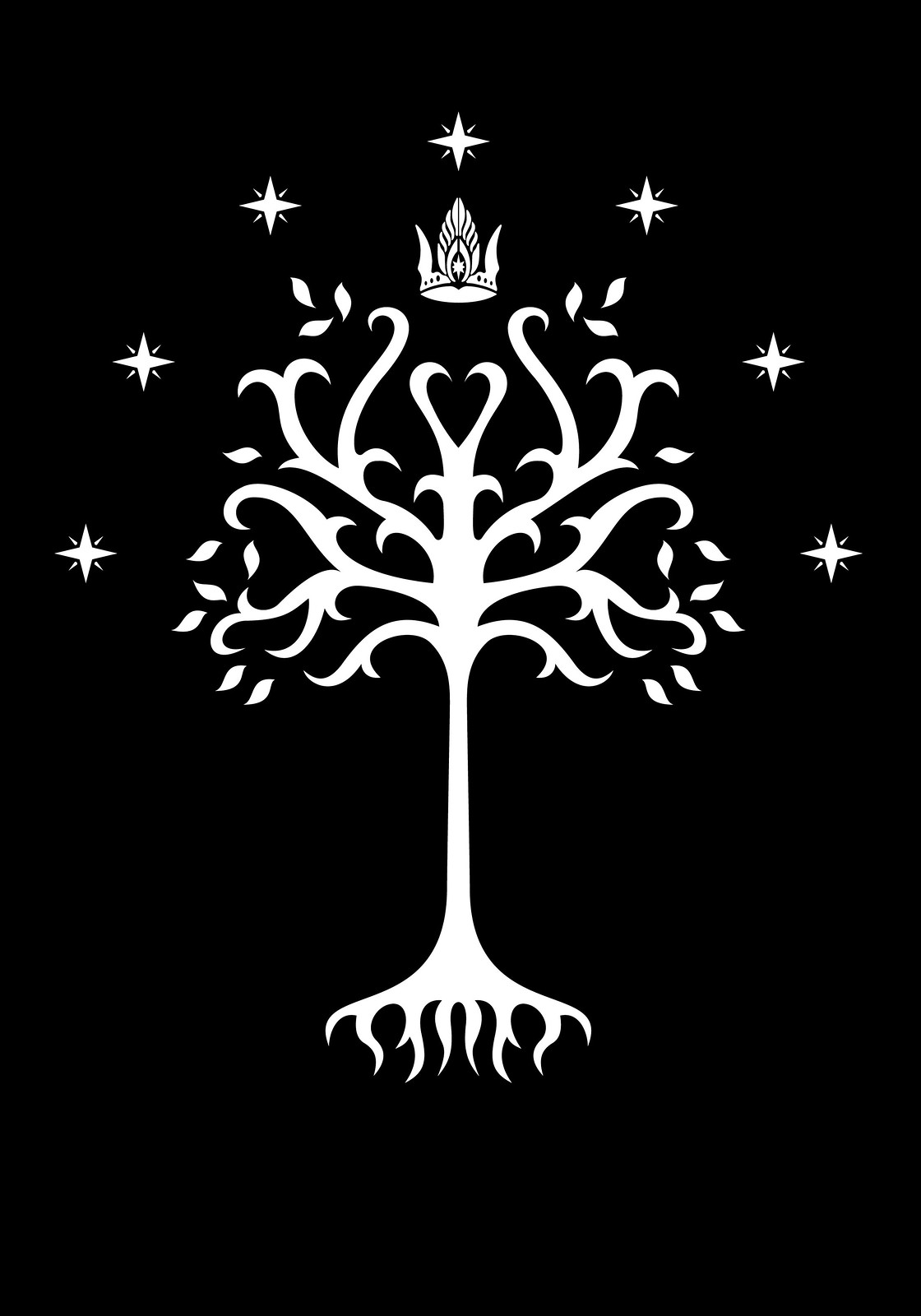

Maybe that last allusion isn't totally strange and unexpected. Although it had been dead for many years, Aragorn and Gandalf find a sapling of the White Tree and plant it in the Court of the Fountain, where it grows and blooms to bring hope and courage to Middle Earth. In the movie version, the blooming is even more dramatic as the dead tree comes back to life and blooms, signaling the return of the King and peace again to the residents of Gondor. 

In this case a King has also been returned to us--a real, historical man who has become legendary to the many students of history who have searched for him for so long.

I also see hope and courage in this sculptural Tree.

Every day we learn more about Richard as a man and King and find that he was not like the character out of Shakespeare but a man of courage and conviction.

Other of life's mysteries, lost in time for centuries, can be rediscovered and change how we think about our past and our present. We just need to keep digging.

Sunday, March 15, 2015

Who Was King Richard III Anyway?

The first question that might come to your mind is, Who is King Richard III and why is he important?

Here are some quick facts about Richard:
  • Richard III was born on 2 October 1452 in Fotheringhay Castle, Northamptonshire, England to Richard Plantagenet and Cecily Neville, the Duke and Duchess of York.
All that remains of Fotheringhay Castle is part of the keep, shown here.
It was also the final place of imprisonment of Mary, Queen of Scots.
It was dismantled in the 1630s.
If you know your English history, you will remember the Plantagenets were a long line of 14 Kings of England dating from Henry II (1154-1189), a powerful man who owned vast lands in Anjou, France, and his wife, Eleanor of Aquitaine, through Richard III, the last Plantagenet ruler.

Henry II and Eleanor are buried in the Church of Fontevraud Abbey in Anjou, France.

  • Rumour has it that Richard killed his two nephews to strengthen his claim to the throne.
Richard was born three years before the War of the Roses began. The War of the Roses was a long civil war between two Plantagenet houses, the Lancastrians and the Yorks, who were both claiming rights to the Throne. It followed the Hundred Years' War, a series of wars from 1337 to 1453 that pitted English and French kings and kingdoms against, while causing socio-economic havoc in each country.

The First Battle of St. Albans, which tried to give rights to the Crown to John of Gaunt, the third surviving son of Edward III who had died in 1377, after Henry V died and Henry VI was still only a very small baby. We have many interesting personalities taking part in these battles, including Henry V at the battle of Agincourt and Jeanne d'Arc at the siege of Orléans.

By the time Richard was old enough to be involved in the conflict, England had gone through several monarchs including:
  • Henry VI (1422-1461 and 1470-1471), succeeded to the thrones of England and France before age one)
  • Edward IV (1461-1740 and 1471-1483), a Yorkist King
  • Edward V (April-June 1483)
  • and finally Richard III (1483-1485)
When Richard's brother Edward IV died, his son, Edward V, was declared King, but he was underage so Richard became Lord Protector. Young Edward and his younger brother were sent to live at the Tower of London, then a residence. Plans were made for Edward's coronation, but were postponed by Uncle Richard.

Then it gets even more complicated. The marriage of Edward IV and his wife, Elizabeth Woodville, was declared invalid and the young Princes were therefore illegitimate. Richard was urged to take the throne. The Princes "disappeared." And we are still discussing what happened to them. Nobody quite knows. Did Richard do it? There were other possibilities. Or maybe they didn't die at this time at all but were scurried out of town and history.

  • Richard was only King of England for two years, 1483-1485.
Although Richard was King for a short time, he did manage to accomplish some things during his rule. He attempted to make peace with the Scottish. He was committed to good governance. He seems to have been a good general and administrator. Richard was also known to be quite pious. But unfortunately, his claim was not widely accepted, and in the end, the Tudors were able to take control.
  • Richard was the last English King to die in battle.
The Battle of Bosworth marked the end of The War of the Roses,

The White Rose of York
Richard died in battle on 22 August 1485 on Bosworth and Henry Tudor claimed the throne. Richard's body was brought back to Leicester, put on public display so everyone would know he was dead, and then given to the Franciscan friars for burial. An alabaster tomb was constructed in 1495, but then when Henry VIII dissolved the monasteries, the friary disappeared and so did records of Richard's grave.
  • Richard had idiopathic adolescent onset scoliosis.
The spinal column
of Richard's skeleton
This was one of the main ways scientists and archaeologists were able identify the bones. Idiopathic adolescent onset scoliosis means that the reason for the scoliosis is unclear (idiopathic) and that it began after age ten. His right shoulder would have been higher than his left, but in armour he would have looked quite normal. This condition would have given him some shortness of breath, but Richard would still have been able to be active.

There is still a lot we do not know about Richard. That is one of the reasons people continue to study his life and times and argue about what it all means. We can never know everything there is about everyone, what was in their heart, what they cared about, why they did what we think they did. It's one of the reasons that history is so fascinating to us to study. It helps us think about our own thoughts, feelings, and actions and how they might be interpreted to others now and in the future.

For a quirkier look at King Richard III, try this video from Horrible Histories, introduced to me by my friend, Joe.