Showing posts with label Richard III. Show all posts

Monday, September 21, 2015

Richard's Ghost

I saw this today on the internet. Yes, I know. You can see everything and anything on the internet. And this is from the Daily Mail, after all.

Here is the link:
Medium claims these images PROVE that the ghost of Richard III now haunts his final resting place in Leicester Cathedral.

Essentially, medium Christine Hamlett of Northwich, Cheshire, was visiting Leicester Cathedral recently, wanting to pay her respects to King Richard, and she had a peaceful feeling in the cathedral which she attributed to Richard's presence. Having been there myself during the Reinterment, I can say there was a calm feeling there that day, too, although not being psychically inclined, I would not have attributed it only to Richard. I do like to think that he was there that day, however.

Anyway, she took some photographs and when she went back to look at them, there was Richard's face looking out from a stone slab in the floor! I think the stone slab in the picture is right outside the area where the tomb is located.

Why do you think Richard's face would be in that place and not closer to the tomb, either next to it or hovering over it? I would like to examine this slab myself. I suspect a lot of people will be headed to the Cathedral soon to do just that, all snapping photos to see if they can see Richard's ghost.

Another ghostly reference to Richard appeared in this article. In nearby Donington le Heath Manor House, a 700-year-old building near Leicester, some ghost hunters claimed they had recorded the actual voice of Richard speaking to them in the bedroom where he last slept!


Why would Richard be in Donington le Heath Manor House? One story is that he spent his last night there. Richard must have had several last nights, since he is also said to have stayed at the Blue Boar in town.

Richard III and the Ghosts
Henry Fuseli & William Blake, ca. 1806
I am a fan of stories of ghosts and haunted places. My favourite movies are all about haunted houses, hotels, ships, and people. So when I hear stories about my two favourite things--ghost stories and Richard III--combined together, I get very excited!

When is the next ghost hunt at Leicester Cathedral? I'm signing up!

Monday, May 11, 2015

The Many Faces of King Richard III--Part 2

In a previous post, I looked at portraits of Richard himself, all done some years after his death.

I have also been thinking of how Richard has been portrayed by others, mostly in that play by William Shakespeare. I don't want to bad-mouth the play since Will Shakespeare is also my cousin (1st cousin 15x removed through his mother's family), and there are some very fine speeches in it.

One of my favourites speeches makes Richard look a complete bad guy, the Epitome of Evil:
"But then I sigh, with a piece of Scripture
Tell them that God bids us to do evil for good;
And thus I clothe my naked villainy
With odd old ends stolen out of Holy Writ;
And seem a saint, when most I play the devil."    
                                                                                     Richard III, Act 1, Scene 3
Of course, this play was written during the height of the Tudor dynasty, and so there was no chance for Richard to ever be made to look good.

I was recently at the Art Institute of Chicago and visited their latest special exhibit, Ireland: Crossroads of Art and Design, 1690-1840, when what should I see:

Mr. Garrick as Richard III
by John Dixon, 1772
David Garrick by my favourite artist,
Thomas Gainsborough
David Garrick, the famous English actor, playwright, theatre manager, and producer, died in 1779, so this portrait was completed soon before his death. His appearance in Richard III was his most famous role.


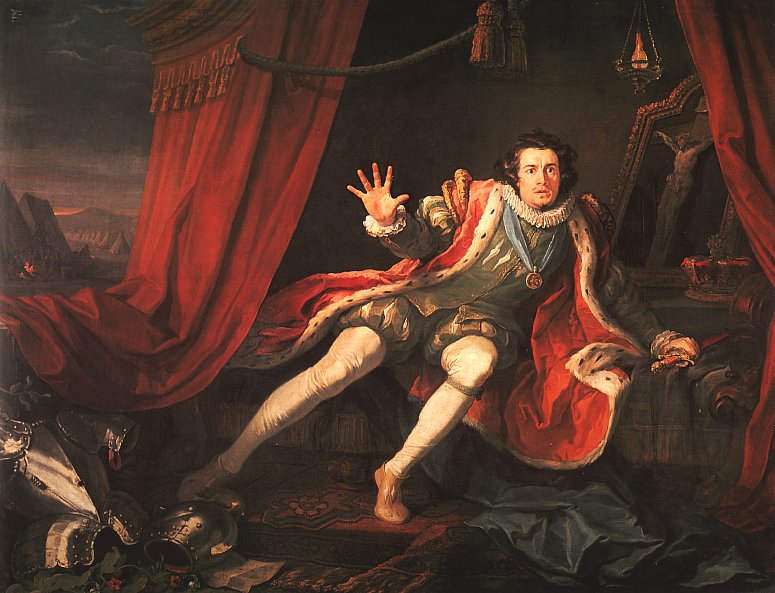
David Garrick as Richard III,
by William Hogarth, 1745
Another famous portrait of Garrick as Richard III was by his friend and famous artist, William Hogarth. This painting depicts a dramatic moment in the play on the eve of the Battle of Bosworth, in which Richard wakes up from a dream in which he has seen the ghosts of his murder victims.

I've been thinking of other famous portrayals of Richard III in Shakespeare's play that have coloured our opinion of him.

John Philip Kemble as Richard III
Painted by William Hamilton, 1783
Another famous actor who portrayed Richard was John Philip Kemble. This painting shows Richard in the play at the same moment as Hogarth's Garrick portrait, on the eve of the Battle of Bosworth, horrified by the dream images of his victims. But it is too late to redeem Richard.


John Philip Kemble (1757-1823), was a famous Shakespearean actor from a remarkably famous theatrical family. His sister was Sarah Siddons, the renowned actress of Drury Lane, painted by many of the era's foremost painters including Thomas Gainsborough, Sir George Reynolds, and . This is what

John Philip Kemble by artist
William Beechey, 1798-1799
Here is another famous painting of an actor portraying Richard:

Bogumil Dawison as Richard III
Painted by Friedrich von Amerling, 19th Century
This is an interesting portrait. The costume is unique, with the unusual headdress crown and the rich brocade on the cloak or coat, but what strikes us immediately is the scowl on the subject's face. It looks like Mr. Dawison is looking down slightly to make his brow more pronounced, a look of condescension and malignant plotting.

What do we know about this actor? Bogumil Dawison was born in Warsaw of Jewish parents in 1818. He went on stage at age 19. He was considered to be a "new type" of actor in Germany during his career, giving his roles more character and vivacity than had been seen before. He died in 1872.

One thing I notice from all of these portraits is that none of them has made Richard look particularly hunchbacked or malformed, although it is obviously part of the play. Perhaps this feature of Shakespeare's Richard was not emphasised in performances?

There have been several more modern portrayals of Richard III that have become famous. I think Sir Ian McKellen in the 1995 modernised film adaption springs to my mind first. This version, set in a fascist version of England in the 1930s, is brutal to Richard as a character. His manipulation of all around him is clear, Ian McKellen is brilliant in the part: sincere yet sneaky, painstakingly plotting, and by the end, we are glad that he's dead.

You can watch the entire film here:


Of course, nobody could forget the greatest modern Shakespearean actor, Sir Laurence Olivier. Besides his landmark roles as Hamlet and Henry V, he also portrayed King Richard in 1955. The costuming is lovely (authentic, I'm not sure), and his "This is the winter of our discontent" speech is unsurpassed in the history of this play, I feel. Richard in this example is portrayed as quite hunched back and having a withered arm, a malady I don't believe Richard had. Why the director gave it to him, I'm not sure, other than to increase our believability in his warped resentment of his physical condition and his malicious grudges of those around him. It's easier to dislike a maimed monster than a man with a slight hunch who is merely misunderstood.

The film is available on YouTube:


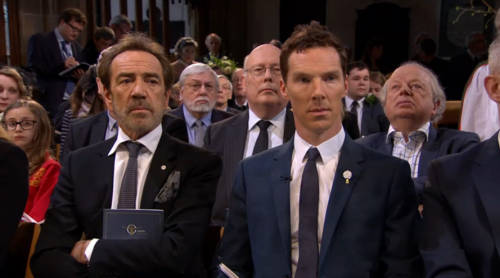
The last actor I will mention is one who played him in a 1998 production for the Royal Shakespeare Company and was also at the Reinterment, Robert Lindsay. He did not receive the most flattering reviews for his performance as the evil King. I don't know if he deserved the harsh reviews, but I certainly have enjoyed watching him in other period roles and wouldn't mind seeing him in his Richard III role.

Robert Lindsay as Richard III
Robert Lindsay & Benedict Cumberbatch
at the Royal Reinterment of King Richard


Tuesday, April 21, 2015

What Did King Richard Eat for Dinner?

One thing in particular that I am missing from England is the food. You might think that British food is bland, boring, and bad. Not so. I found it to be some of my most favourite ever and I am having a major problem with not being able to get any whenever I want.

What foods do I miss most?

Cream Tea at Coughton Court
Cream Teas: A good cream tea is composed of tea with milk and maybe sugar; a light, fluffy scone with or without currants; jam; and that elusive delicacy, clotted cream. Clotted cream, from Devonshire, is unlike anything we have here in the States. It is rich and creamy, highly spreadable, and full of calories. It is pure cream that has been solidified through a special process. I think you can find it in specialty stores, but I am still searching for it here in my city. Can you make it yourself? Yes, with time and patience and probably some sort of magic spell.

Put the jam on first and then the clotted cream. You will be in heaven with each bite.

John's Special English Breakfast--
just what I wanted!
English Breakfast: The best English Breakfast is composed of so many elements. You can have what I had--black pudding, bacon (not our thin, dainty bacon but real chunky bacon), egg, and toast--or you can add other things such as sauteed mushrooms, grilled tomato, baked beans (yes, beans for breakfast), sausages, or some sort of potato, such as hash browns.

I should say a word about black pudding. It is a type of sausage. You might not want to eat it if I tell you what is in it (pig's blood), but if you are a meat eater, you are eating animal blood anyway. This is just a good utilisation of all parts of the animals we eat. In the old days, farmers could not afford to waste any part of what could be food. It might be the line between starving or not. Black pudding is a little spicy and has a granular texture due to the suet (another animal product) and oatmeal. Give it a try. You might have found a new favourite food.

Chicken and Leek Meat Pie
And last, but certainly not least, Meat Pies: How can we think we have meat pies in the United States when all we have are pot pies? These are not the same at all.  The meat pies I am missing are full of big chunks of meat with flavourful  gravy (unless it is a pork pie), all surrounded by flaky crust. There can be vegetables inside, but they are not primary, unlike the pot pie. We can have shepherd's pie, with lamb and mashed potatoes on top, or cottage pie, the beef variation, but those little self-contained pastries full of meaty goodness are very hard to come by here.

I have found a place to special order them. The main problems are that they are a bit expensive and frozen. I think are turning out quite well in my taste experiments, however, if cooked properly. I have yet to decide on a favourite, although Steak and Mushroom is definitely in the running. I can't really get any fish pies from this place, so I will have to keep searching for that yummy dish.

What, may you ask, does all of this have to do with King Richard???

Last year, the British Geological Survey put out a study in association with researchers at the University of Leicester to study the bone and tooth chemistry of King Richard. They discovered some fascinating facts about his diet.

They discovered that Richard had had major changes in diet and location in his early childhood and in later life. The period we are most interested in, his later life when he became King, seems to indicate that he began to indulge in a diet filled with expensive and high status food and drink. How do they know this?

The chemistry of the femur, ribs, and teeth indicate changes in development at different stages of life. "Isotrope" measurements for geographical location, pollution, and diet, can be analysed. The teeth, which form in childhood, seem to indicate a change for Richard, confirmed when he moved from his birthplace at Fotheringay Castle to eastern England at age 7. He was in an area of higher rainfall, older rocks, and had a significant change in diet.


By looking at the femur, researchers could tell that he had moved back to eastern England and then began to eat rich foods common to the highest aristocracy.

The third bone to look for clues, the rib, renews itself quickly in growth, so it only represents the last 2 to 5 years of life. The data from this bone indicate the greatest change in diet. Researchers discovered that the biggest change here from the femur bone data is that he began to eat more freshwater fish and birds, which were popular at royal banquets. He was also probably drinking more wine.

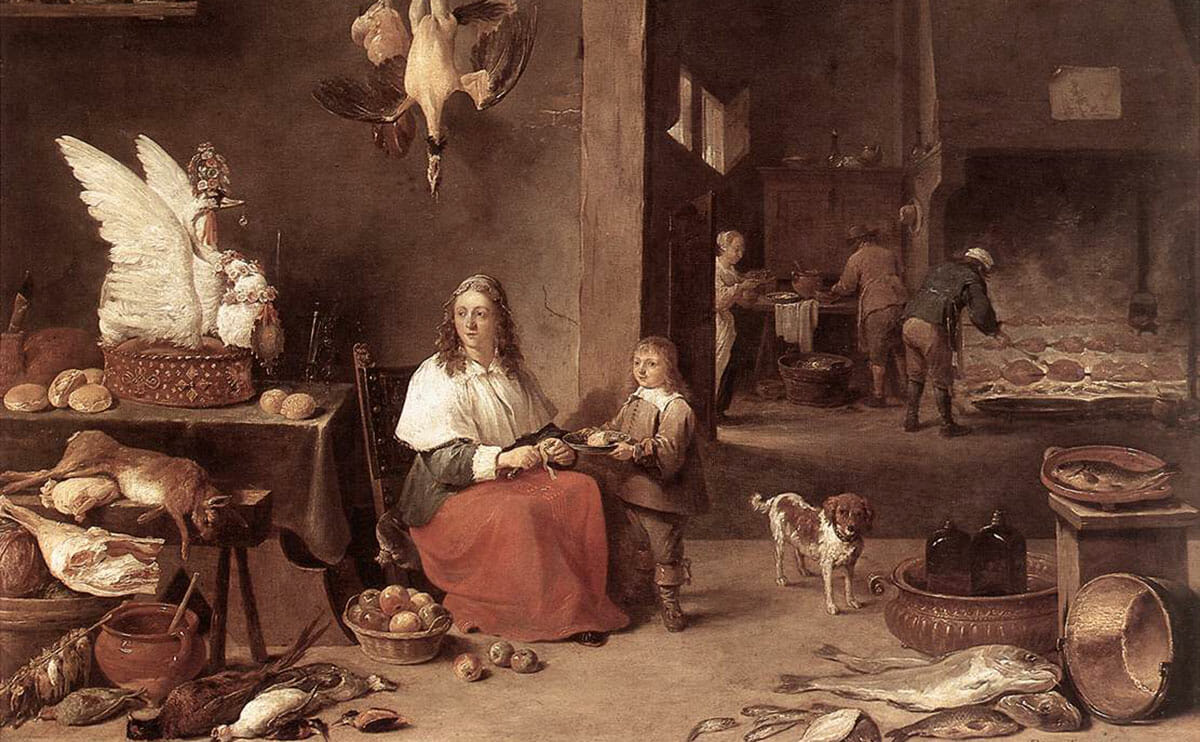
So what did King Richard eat? Birds such as swan, crane, heron, and egret would have been common fare at a kingly banquet. There was a lot of meat on the table. Vegetables and fruit were mostly for poorer folk, although exotic fruits could be found on the table. Pastries, breads, cheeses, nuts, and wine and ale would have been abundant. Oxen, fish, poultry, eggs, beef, pork, and mutton were included in many feasts. And meat pies, too! The desserts alone were probably amazing. There would be jellies, tarts, custards, cakes, and more.

The nobility were also able to eat three meals a day, unlike the common folk. That would be a lot of work for kitchen staff!

Eating like this very often would make one quite corpulent and unfit for battle. I can only suppose that Richard didn't feast very often if he had to be ready for war at any time. Besides, how would he have fit into his armour? 

But a good feast of British food can be a nice way to celebrate something special!

Tuesday, March 24, 2015

Highlights from the King Richard III Visitor Centre

Today I spent the day in Leicester, taking in all the sites.

The first visit was to the King Richard III Visitor Centre. It was quite crowded.

One thing I noticed was that there was A LOT of information given to us about Richard, how he lived, how he died, and how he was discovered. There was a lot of reading to do. It was all fascinating, but it didn't help the queue to move through very quickly, since we were all hung up absorbing all of that information.

The few items to look at included some digger outfits, Philippa Langley's boots, and a replica suit of armour.

One thing that I thought was interesting was the skeleton of Richard, replicated on a 3-D printer.


But the most meaningful part of the RIII Visitor Centre is the room where they have preserved the former gravesite. It is enclosed in a glass or acrylic enclosure and you can look down into it. There is a camera that projects an image of the placement of the bones in the grave. 

To see the actual place where Richard lay for half a century is probably one of the most moving experiences I have had. Words cannot express what I was feeling about it. I am in awe.


Sunday, March 15, 2015

Who Was King Richard III Anyway?

The first question that might come to your mind is, Who is King Richard III and why is he important?

Here are some quick facts about Richard:
  • Richard III was born on 2 October 1452 in Fotheringhay Castle, Northamptonshire, England to Richard Plantagenet and Cecily Neville, the Duke and Duchess of York.
All that remains of Fotheringhay Castle is part of the keep, shown here.
It was also the final place of imprisonment of Mary, Queen of Scots.
It was dismantled in the 1630s.
If you know your English history, you will remember the Plantagenets were a long line of 14 Kings of England dating from Henry II (1154-1189), a powerful man who owned vast lands in Anjou, France, and his wife, Eleanor of Aquitaine, through Richard III, the last Plantagenet ruler.

Henry II and Eleanor are buried in the Church of Fontevraud Abbey in Anjou, France.

  • Rumour has it that Richard killed his two nephews to strengthen his claim to the throne.
Richard was born three years before the War of the Roses began. The War of the Roses was a long civil war between two Plantagenet houses, the Lancastrians and the Yorks, who were both claiming rights to the Throne. It followed the Hundred Years' War, a series of wars from 1337 to 1453 that pitted English and French kings and kingdoms against, while causing socio-economic havoc in each country.

The First Battle of St. Albans, which tried to give rights to the Crown to John of Gaunt, the third surviving son of Edward III who had died in 1377, after Henry V died and Henry VI was still only a very small baby. We have many interesting personalities taking part in these battles, including Henry V at the battle of Agincourt and Jeanne d'Arc at the siege of Orléans.

By the time Richard was old enough to be involved in the conflict, England had gone through several monarchs including:
  • Henry VI (1422-1461 and 1470-1471), succeeded to the thrones of England and France before age one)
  • Edward IV (1461-1740 and 1471-1483), a Yorkist King
  • Edward V (April-June 1483)
  • and finally Richard III (1483-1485)
When Richard's brother Edward IV died, his son, Edward V, was declared King, but he was underage so Richard became Lord Protector. Young Edward and his younger brother were sent to live at the Tower of London, then a residence. Plans were made for Edward's coronation, but were postponed by Uncle Richard.

Then it gets even more complicated. The marriage of Edward IV and his wife, Elizabeth Woodville, was declared invalid and the young Princes were therefore illegitimate. Richard was urged to take the throne. The Princes "disappeared." And we are still discussing what happened to them. Nobody quite knows. Did Richard do it? There were other possibilities. Or maybe they didn't die at this time at all but were scurried out of town and history.

  • Richard was only King of England for two years, 1483-1485.
Although Richard was King for a short time, he did manage to accomplish some things during his rule. He attempted to make peace with the Scottish. He was committed to good governance. He seems to have been a good general and administrator. Richard was also known to be quite pious. But unfortunately, his claim was not widely accepted, and in the end, the Tudors were able to take control.
  • Richard was the last English King to die in battle.
The Battle of Bosworth marked the end of The War of the Roses,

The White Rose of York
Richard died in battle on 22 August 1485 on Bosworth and Henry Tudor claimed the throne. Richard's body was brought back to Leicester, put on public display so everyone would know he was dead, and then given to the Franciscan friars for burial. An alabaster tomb was constructed in 1495, but then when Henry VIII dissolved the monasteries, the friary disappeared and so did records of Richard's grave.
  • Richard had idiopathic adolescent onset scoliosis.
The spinal column
of Richard's skeleton
This was one of the main ways scientists and archaeologists were able identify the bones. Idiopathic adolescent onset scoliosis means that the reason for the scoliosis is unclear (idiopathic) and that it began after age ten. His right shoulder would have been higher than his left, but in armour he would have looked quite normal. This condition would have given him some shortness of breath, but Richard would still have been able to be active.

There is still a lot we do not know about Richard. That is one of the reasons people continue to study his life and times and argue about what it all means. We can never know everything there is about everyone, what was in their heart, what they cared about, why they did what we think they did. It's one of the reasons that history is so fascinating to us to study. It helps us think about our own thoughts, feelings, and actions and how they might be interpreted to others now and in the future.

For a quirkier look at King Richard III, try this video from Horrible Histories, introduced to me by my friend, Joe.